

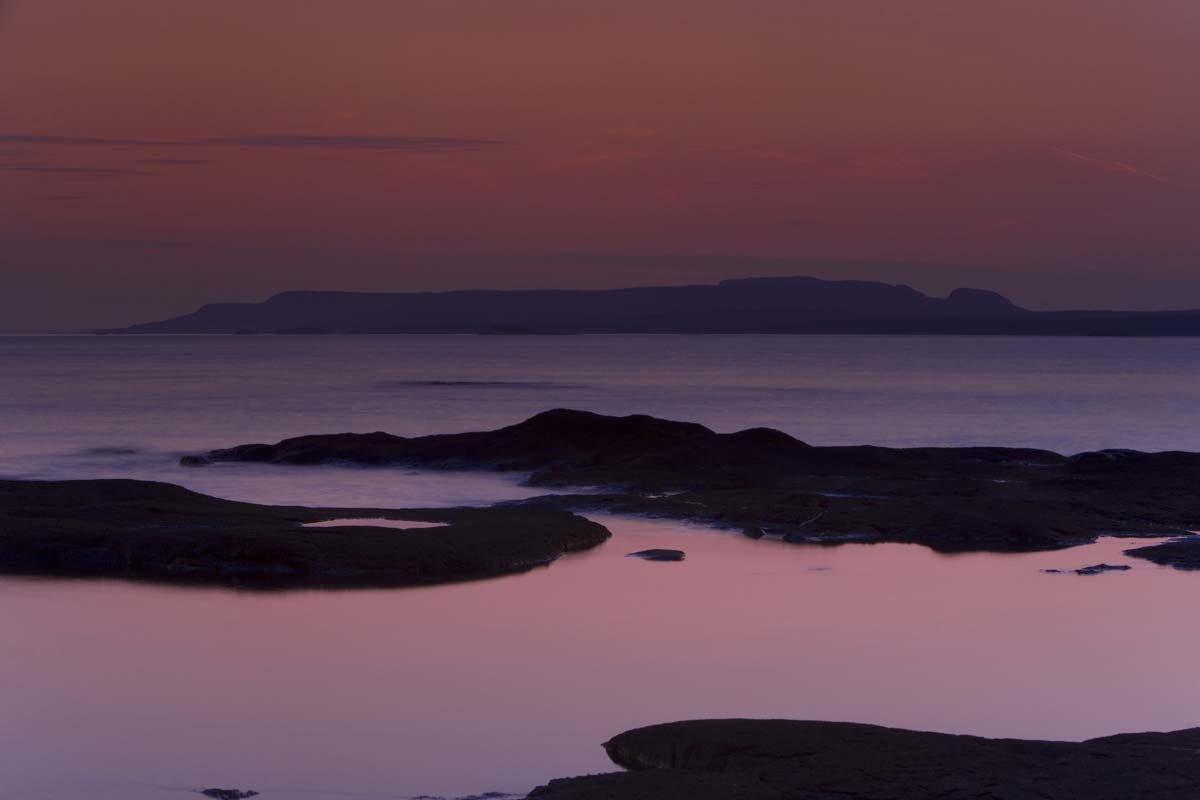
My partner Shanthi and I were in Thunder Bay, the traditional territory of the Anishinaabeg, in the long shadow of Animikie-wajiw (Thunder Mountain), nestled on Gichigami (Lake Superior, The Great Sea in Ojibwe).
Thunder Bay is nestled 49 degrees north, the same latitude as northern Gaspe. The beauty of this place has been nourishing me. In the language of Ayurveda, Pitta dosha needs beauty—the enduring kind. Beauty soothes my rakta pitta imbalance. I realized the source of this nourishment and ease is a profound aliveness.
But what is that sense of aliveness?
It's greater than the sum of its parts. I can name the wind, the ancient stone, the whisper of the trees, but are these external to me? Here, beauty is about feeling alive, the give-and-take responsiveness of a place. Does it breathe? Is it awake? Am I in relationship with it? How?
This beauty stretches beyond the aesthetic, which is a human-centered definition of beauty that appeals to contemporary standards of desirability. While cultural tastes change, the factor of aliveness remains the marker of long-lasting beauty.
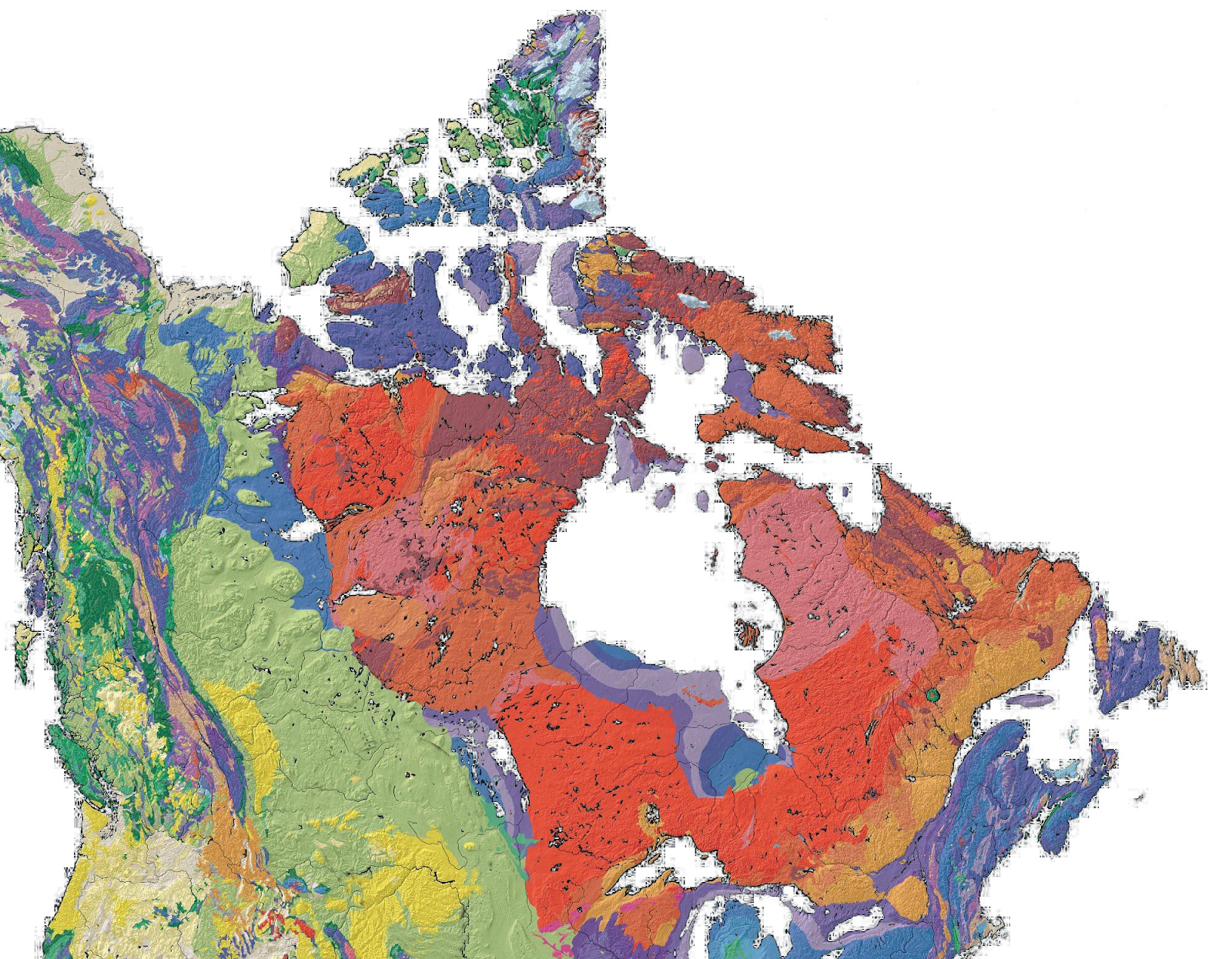
Beauty is a process. It’s the unfolding that happens within me as I witness. I find beauty in what is most alive. I am stunned, awestruck by the stones, the forest, the water. Billions of years old, these stones of the Laurentian Plateau are some of the most ancient rocks on the planet. Here, a great sleeping giant of a peninsula lies across the water—a form the Anishinaabeg know as Nanabijou.
According to Ojibwe story, Nanabijou is the Spirit of the Deep Sea Water, turned to stone after he warned his people not to reveal the location of a rich silver mine at his feet. When the secret was betrayed, a great storm raged upon the lake, and when the waters finally calmed, Nanabijou was frozen in his current form—a dormant guardian of the bay.
The aliveness I feel comes from this meeting of geological time and mythic story. I feel this the same way I felt the death of my friend, as a rattle in my bones beyond my mind's comprehension. Aliveness is part and parcel of life's complexity; its antonym is not death, but numbness.
Death and aliveness are partners. Dying can be welcomed as an alive part of life, or it can be shunned. A personal and cultural set of conventions shapes whether my relationship to the event is one of aliveness or numbness. For those with chronic illness, this becomes painfully clear: there's trauma in the event, and there's retrauma in the social refusal to acknowledge the event's reality. Is a symptom or diagnosis received as a sentence, reinforced by this social dismissal? Does it define all future happiness and misery? Or can I, despite a diagnosis, take the process of being in a body to be a continual series of discoveries?
If I can orient my experience with a sense of curiosity, even when the cycle seems trite and overdone, then the process remains alive. This is the ground state that practices like Taiji and Qigong train: creating the conditions to hear one's inner voice by enforcing a context that quiets everything else. This is the medicine for what is wrong, culturally. It is the cultivation of an inner warrior, a training in integrity.
Beauty and aliveness are easy to find when we turn our minds to aliveness. This kind of beauty is not transactional, not a form ready for consumption. It is a principle, a force; it is a power operating at all scales through all the senses I am capable of feeling. The relationship required for the experience of beauty flows from a wellspring of aliveness. I can follow the aliveness to its root and find beauty there.
You are free to find different aesthetics pleasing, but beauty itself is fundamental. A smile. The ocean. A sunrise.
My associations with the ocean will be different from yours. I remember growing up near the North Pacific, on the Salish Sea. As a descendant of settlers, the ocean held the promise of a better life for my ancestors, escaping the 16th Century toil of old Europe. For others, the ocean is a visceral link and reminder of the transatlantic slave trade. For others still, it represents the shores escaped to when fleeing war. Or memories of near-drowning, of losing a lover to a storm.
These stories are real. They weigh heavily on human life and history, and they do not diminish the intrinsic beauty of water, of tides, of the crest and trough of the waves, of the cycles and their inextricable ties to the moon and the stars.
In my own life, I remember evenings spent building sandcastles and having picnics by the waves. Out east, I remember the long stretches of pebble beach in Gespe'gewa'gi and the cold frost of Kaniatarowanenneh, the St. Lawrence River.
The ocean is beautiful and it holds all these stories. Its sheer immensity is an eternal reminder of my finitude, showing me that I am small. It reminds me of human folly and keeps my priorities in check.
What, then, is the point of this meditation on beauty? It keeps me grounded. My sanity, and therefore my remission and recovery, depends on my remembrance of our interdependence. Beauty and aliveness are the portal. They are the salt and the mercury, the catalyst for the alchemical process.
Beauty is a story we tell ourselves and each other about what we value. If I believe that gold chains and brand names are beautiful, that the aesthetic they convey is powerful, then I am living the story of a certain culture with a certain value system. If the beauty I want to access is material, I will prioritize money. The way I perceive beauty will directly determine my daily priorities and how I use my time.
But if beauty is a felt sense of aliveness, then I don't need anything external to access it. I can just receive its presence. My days and years don’t need to be ruled by material accumulation. I'm trying to live that way: meeting baseline needs while placing the highest value on the beauty I can feel by tuning into my sense of aliveness, here and now.
That’s what I practice. That’s health.