

Women develop autoimmune conditions at rates that should stop conversation.
Condition-weighted reviews put the figure at roughly four in five: 78% of autoimmune patients are female.[1] A 2023 population study of 22 million people in the UK found the gap between women and men widens sharply by diagnosis: lupus at 9 to 1, Sjögren’s at 6 to 1, Hashimoto’s at nearly 6 to 1, primary biliary cholangitis at 10 to 1, rheumatoid arthritis at 2 or 3 to 1.[1-1][2] Conditions, geographies, study designs: the ratio holds.
The standard explanation is biological. It goes like this: The molecular architecture exists. Women have two X chromosomes. Estrogen promotes autoreactive B cell survival, which promotes female sex-biased autoimmunity.[3]
But architecture and causation are different orders of claim. Lungs make emphysema possible. What causes it is what fills them. XX chromosomes make lupus possible. What actually causes lupus is whatever fills the body with a stress response that cannot resolve. The biological explanation accounts for susceptibility, it does not account for incidence. Why do so many more women develop these conditions than men, by ratios as extreme as 9 to 1?
One in three women worldwide has experienced physical or sexual violence. The WHO’s numbers: 840 million women across a lifetime.[4] The range by region runs from 20% in high-income countries to 33% in Africa and South-East Asia.[4-1] Even the floor is staggering: more than one in five women in the wealthiest nations on earth. Intimate partner violence alone affects 27% of women who have been in relationships. White and colleagues’ 2023 meta-analysis of 201 studies confirmed the mental health consequences: doubled odds of depression, 2.6 times the odds of
PTSD.[5] Thirty-eight percent of all women murdered are killed by their partners.[4-2]
The autoimmune ratio and the violence ratio are the same number, read differently. The violence that produces the first number includes the childhood experiences that produce the second.
The Adverse Childhood Experiences (ACE) Study: 15,357 adults, followed from the mid-1990s through 2005. Dube, Fairweather, and colleagues published the dose-response in 2009. For every additional adverse childhood experience, a woman’s risk of hospitalization for autoimmune disease increased 20%. Two or more ACEs: more than double the hazard ratio. The gradient was linear, and steeper for women than for men.[6]
Köhler-Forsberg and colleagues replicated this in 2025 across two cohorts totaling 108,915 women: 22,423 Icelandic, 86,492 in the UK Biobank. Each additional ACE raised the prevalence ratio by 10%. For Sjögren’s, 34%. For polymyalgia rheumatica, 20%. The ACEs most consistently associated with autoimmunity: sexual abuse, physical neglect, emotional neglect.[7] A quarter of the association ran through depression, anxiety, and PTSD. Three-quarters passed through a channel the psychometric instruments could not reach.
The same dose-response, gender-amplified pattern appears over and over: the more ACEs, the higher the risk of illness, with the steepest rises in the conditions most skewed toward women. [8]
The mechanism runs through the hypothalamic-pituitary-adrenal (HPA) axis. With an acute threat: cortisol spikes, immune function modulates, the organism survives.
With a chronic threat, an ongoing sense of danger: the whole body degrades. Glucocorticoid receptor resistance develops. Cortisol’s anti-inflammatory signal weakens. The body stays inflamed because it cannot hear the signal to stop.[9][10] Juster and colleagues describe this as a temporal cascade of dysregulations accumulating across neuroendocrine, immune, metabolic, and cardiovascular domains.[11]
Palma-Gudiel and colleagues found the molecular proof: Lower methylation meant higher TNF expression when immune cells were stimulated. The stress had rewritten the gene’s responsiveness at the molecular level.[12]
Neigh and Ali found that PTSD patients carry roughly 50% fewer regulatory T cells, the cells responsible for maintaining self-tolerance. Inflammation wins.[13] Maihofer and colleagues’ 2024 Mendelian randomization of 1.2 million individuals found that genetically predicted PTSD has a causal effect on autoimmune thyroid disease. The direction runs one way: trauma first, thyroid second.[14]
Campos-Tinajero and colleagues measured this directly. In a Mexican hospital, 24.4% of women with lupus had experienced intimate partner violence in the past year. Lifetime prevalence: 36.5%. Abuse severity tracked precisely to lupus disease severity.[15]
Yim and colleagues’ 2019 review found “emerging evidence of stress-related endocrine and immune-inflammatory dysregulations that are in line with patterns typically observed among chronically stressed individuals.”[16]
Translated from the passive voice of academic caution: the biological signatures of intimate partner violence overlap the biological signatures of chronic stress, which overlap the signatures that precede autoimmune disease. One set of marks, one hand.
Violence against women receives less measurement, less funding, less academic publication. Stubbs and colleagues’ 2021 systematic review of 52 studies on IPV and physical health found increased risk of diabetes, sexually transmitted infections, chronic pain, CD4+ cell depletion, and chronic disease broadly. They noted “significant gaps in this field of research, particularly in relation to cardiovascular disease, endocrine dysfunction, and neurological symptoms and conditions.” [17] What has gone unmeasured would likely be stronger.
Ongoing and repeated violence produces chronic stress, which dysregulates the HPA axis, which reprograms immune gene expression through epigenetic modification, which erodes self-tolerance. Autoimmunity follows.
Sophie Strand collapsed at sixteen. Ehlers-Danlos syndrome, mast cell disease, gastroparesis, autoimmune comorbidities. Years of antibiotics that destroyed her gut biome. Doctors who called her body toxic. Wellness practitioners who diagnosed her as sludged with demons, then blamed her when their treatments failed.
She writes excruciatingly publicly about being an abuse survivor. Today, this week, she writes the connection directly: “This past month a rash has spread over my whole body. I’m told it is an autoimmune response to a cold virus. But I know it is also my anger spilling over my very cells. It has to move. It can’t be quiet.”
In “I Will Not Be Purified,” she names what both medicine and wellness culture share: a purity logic that frames illness as contamination and the sick body as morally failed. The doctors tried to clean her. The healers tried to clean her. The cleaning was itself the pathogen. She proposes ensoilment over ensoulment: compost instead of purification. “In order to grow a garden, you need manure.”[19]
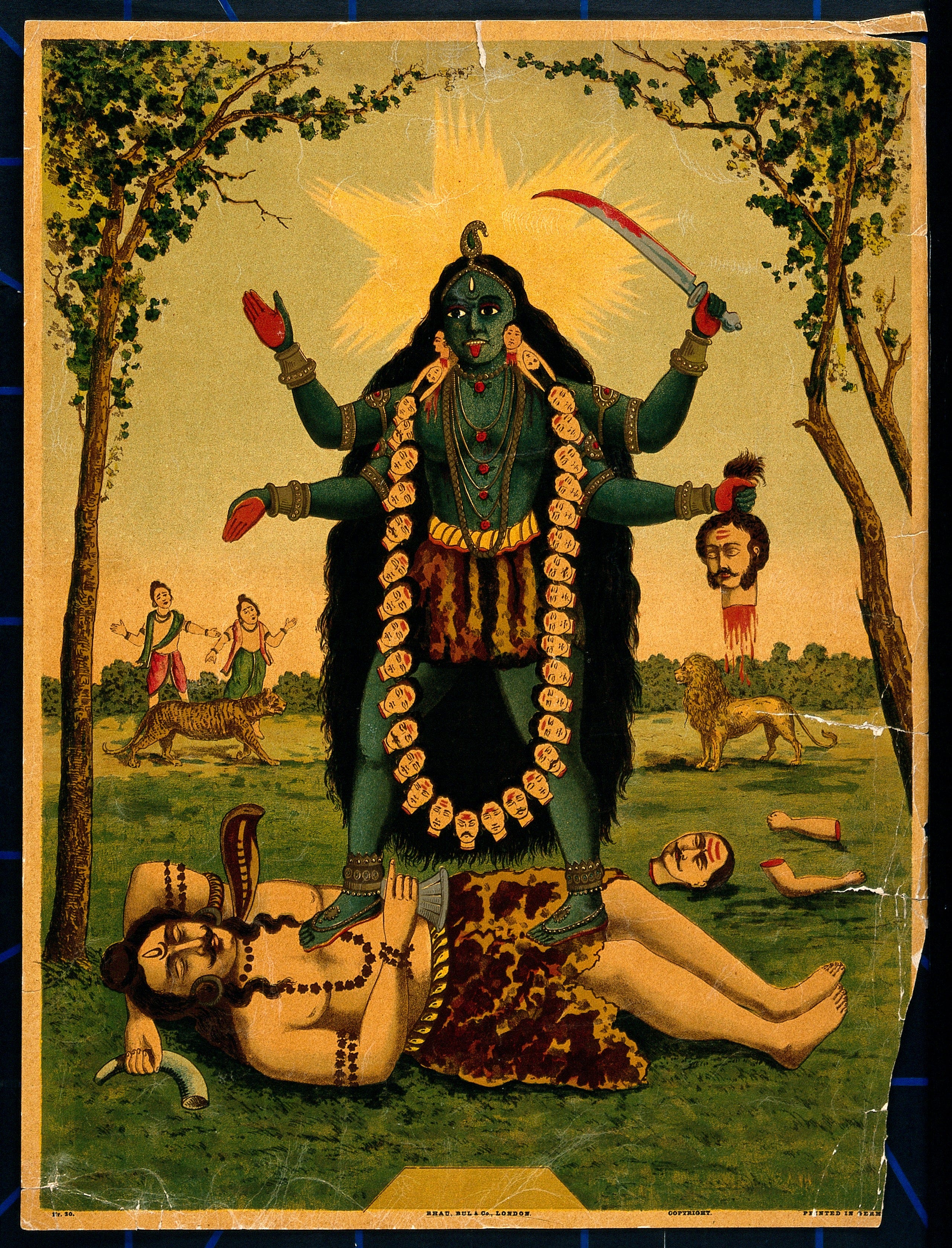
The Caraka Samhita spelled this out two thousand years ago. Anger, krodha, is classed among the urges that must be restrained, dharaniya vegas. Not because restraint is virtuous, but because the unrestrained urge does what unrestrained urges do: it burns through tissue. Caraka lists what anger does to the body. Muscle laxity. Joint looseness. Heat in blood. Fat melting. Marrow hollowing out. Semen depleted. Vitality lost.[20] The Saṃhitā does not moralize about anger. It maps its consequences and its vicious effects on health. Anger is āgneya, fiery. It aggravates the body’s capacity for transformation. It disturbs the digestive fire, so that food is no longer digested but fermented and turned to metabolic waste. It vitiates the blood, and from that vitiation: skin disease, metabolic collapse, bleeding disorders, cardiac damage.[21] The text is explicit. Anger is not a feeling that happens to live in a body. It is a thermal event with physiological consequences, and the body that cannot metabolize it carries ongoing combustion in its structure. Anger is also a correct response to grave systemic injustice and the millenia-long pandemic of violence against women and queer people.
If you have forever been embedded in systemic abuse and suffering, where do you turn your anger? If no one around you knows what it means to fear one’s own body rather than one’s own mind, how do you share it? If the slightest discomfort reminds your body of what is has intimately known through coercion, and the cells scream death by internal trauma, how do you find a way to relax?
The Ayurvedic mapping and the epidemiological data describe the same process. Caraka takes the anger at face value, while the adverse childhood experiences studies read the dose-response and mental distress, and the endocrine axis studies on regulation and epigenetic programming describe the stress at molecular scale. They are describing the same bodies.
Sophie’s point (which is also my argument), is that the body records what was done to it, and the record is legible in the immune system. The anger that cannot move metabolically becomes autoantibodies. The grief that cannot be released becomes chronic inflammation. The body becomes what it cannot release. Autoimmune markers are the body’s record of what it could not metabolize. Estradiol and XIST describe the terrain. Violence describes the ignition. The hormonal and chromosomal explanations account for why the female body can develop autoimmunity. The violence data accounts for why, in such numbers, it does.
Thirty percent of women worldwide physically or sexually violated. A direct mapping between ACEs and autoimmune hospitalization, replicated across cohorts totaling over 100,000 women. Direct correlation between partner violence severity and lupus disease activity in a clinic in Monterrey. Causal arrow from PTSD to autoimmune thyroid disease in a Mendelian randomization of 1.2 million people. How can you not be angry? How can we live in any state except perpetual anger, with this being the state of the world?
Men are taught we can hurt women and face nothing. This teaching has a biological output. It shows up in stress genes rewritten, in the immune cells that should maintain self-tolerance depleted by half, in the cortisol receptors that stop listening, in the hospitalization records of 100,000 women across two continents and thirty years of data. The body keeps what was done to it. The immune system is the transcript.
Why do women develop more autoimmune diseases? The cause has a name. The cause is violence. Not the kind that makes the news. The kind that is so common it registers as background: the childhood abuse, the intimate partner violence, the sexual assault, the daily threat that keeps their stress response permanently activated. The women worldwide who carry this in their blood are bearing the cost. The autoimmune markers are visible effects. The physiology is clear enough. The overwhelming silence of men, myself included, is the only thing left to explain.
Voskuhl R. “Sex differences in autoimmune diseases.” Biology of Sex Differences 2:1, 2011. PMC3022636↩︎↩︎
Incidence, prevalence, and co-occurrence of autoimmune disorders over time and by age, sex, and socioeconomic status: a population-based cohort study of 22 million individuals in the UK. Volume 401, Issue 10391. 2023. Lancet↩︎
Dou DR et al. “Xist ribonucleoproteins promote female sex-biased autoimmunity.” Cell 187(3):733–749, 2024. Duke↩︎
WHO. “Violence against women prevalence estimates, 2023.” WHO↩︎↩︎↩︎
White S et al. “Global Prevalence and Mental Health Outcomes of Intimate Partner Violence Among Women: A Systematic Review and Meta-Analysis.” Trauma, Violence & Abuse 24(2):465–482, 2023. Consensus↩︎
Dube SR, Fairweather D, Pearson WS, Felitti VJ, Anda RF, Croft JB. “Cumulative Childhood Stress and Autoimmune Diseases in Adults.” Psychosomatic Medicine 71(2):243–250, 2009. PMC3318917↩︎
Köhler-Forsberg O et al. “Adverse childhood experiences, mental distress, and autoimmune disease in adult women: findings from two large cohort studies.” Psychological Medicine 55:e36, 2025. PMC12017369↩︎
Sarnai Arlud et al. “Gender differences in the association between adverse childhood experiences and early onset psoriasis.” Scientific Reports, 2025. Consensus↩︎
Gutierrez Nunez S et al. “Chronic Stress and Autoimmunity: The Role of HPA Axis and Cortisol Dysregulation.” International Journal of Molecular Sciences, 2025. Consensus↩︎
Alotiby A. “Immunology of Stress: A Review Article.” Journal of Clinical Medicine, 2024. Consensus↩︎
Juster RP et al. “Allostatic load biomarkers of chronic stress and impact on health and cognition.” Neuroscience & Biobehavioral Reviews, 2010. Consensus↩︎
Palma-Gudiel H et al. “HPA axis regulation and epigenetic programming of immune-related genes in chronically stressed and non-stressed mid-life women.” Brain, Behavior, and Immunity, 2021. EuropePMC↩︎
Neigh GN, Ali S. “Co-Morbidity of PTSD and Immune System Dysfunction: Opportunities for Treatment.” Current Opinion in Pharmacology 29:42–48, 2016. PMC4992603↩︎
Maihofer AX et al. “Effects of genetically predicted posttraumatic stress disorder on autoimmune phenotypes.” Translational Psychiatry, 2024. Nature↩︎
Campos-Tinajero E et al. “Impact of intimate partner violence on quality of life and disease activity in women with systemic lupus erythematosus.” Lupus, 2024. Consensus↩︎
Yim IS et al. “The psychobiology of stress and intimate partner violence.” Psychoneuroendocrinology 105:45–54, 2019. Consensus↩︎
Stubbs A et al. “The Effect of Intimate Partner Violence on the Physical Health and Health-Related Behaviors of Women: A Systematic Review.” Trauma, Violence, & Abuse 22(4):935–949, 2021. Consensus↩︎
Caraka Saṃhitā, Sūtra Sthāna 17.73–77; Vimāna Sthāna 4.8. Krodha listed among dharaniya vegas (urges to be restrained). Physical consequences enumerated: māṃsa-śithilata (muscle laxity), vimuchyati sandhi (joint looseness), rakta-vidāha (heat in blood), meda-vilayana (fat melting), majja-kṣaya (marrow depletion), śukra-kṣaya (semen depletion), ojakṣaya (loss of vital essence). See also Madhavi & Khobragade 2025; Pandit & Kolarkar 2021.↩︎
Caraka Saṃhitā, Cikitsā Sthāna 15.30–36; Sūtra Sthāna 17. Krodha as āgneya (fiery), Pitta-aggravating. Effects on Agni (digestive fire disturbance leading to ajīrṇa, amlapitta), Rakta dhatu (vitiation producing vyanga/melasma, paittika prameha/diabetes subtypes, bleeding disorders). See also Hardik et al. 2022; Shukla et al. 2021; Sud 2017.↩︎