

This is part of a series. It stands alone, or you can read part 1 (principles) here, and read part 2 (family history) here.
There are trans-cultural principles to guide healthful decision-making when eating. Recognize first that the manner and content of eating has a direct and cumulative effect on autoimmune balance. Accepting that for a fact, it becomes extremely important to take care in order to avoid autoimmune relapse. And even then, I know I am not fully in control. I am a picky eater. I rarely accept food offered to me that I did not explicitly choose or implicitly trust because I know the person offering it. You’d think I’m trying to avoid getting poisoned. In some ways I suppose I am. Perhaps I am overcautious, but I do not trust the dietary choices of industrialized nations.
1. I need food that avoids deep frying (heating in nature + free radicals = inflammation = āma (toxins) = autoimmune relapse).
In damp and hot climates, tending jatharagni (जठराग्नि, the Central Digestive Fire) in the stomach and small intestine becomes exponentially important.
Agni is the Sanskrit word for fire, both in the cosmos and in the human body, our capacity for transformation and heat, for assimilation and transmutation. Adapting to moderate spice levels is not only a matter of personal taste; it keeps digestion functional, keeps Tejas (तेजस्, the subtle essence of fire and radiance) manifesting physically as jatharagni. Eating local food is the surest way to co-regulate with the environment. And I check: how many people eat there? A busy restaurant is a safe restaurant.
Heat is a double-edged sword. Enough of it will support Pachaka Pitta (पाचक पित्त, “that which digests”) and Agni, enabling the body to handle food, absorb nutrients, and separate waste. Too much of it, and patterns of disharmony begin to emerge. My specific condition, immune thrombocytopenia, involves complex signs of heat in the blood and on the skin. Purpura and easy bruising are signs of Rakta Pitta, a category of bleeding disorders in Ayurveda caused by an excess of Pitta dosha affecting the blood, appearing as purple discoloration or tiny red spots under the skin due to capillary breakdown and “leaking” of vitiated blood.
2. I need vegetables to be my primary food group, in close equivalence with whole grains. Fiber, vitamins and minerals.
I don’t eat like a monk. Some monastic sects are vegetarian; they are considered strict. Then there is eating Jay. If vegetarianism is a dietary choice, Kin Jay is a karmic firewall. No meat, no dairy, but also no “pungent herbs”—no garlic, onions, chives—because stimulation is the enemy of the spirit.
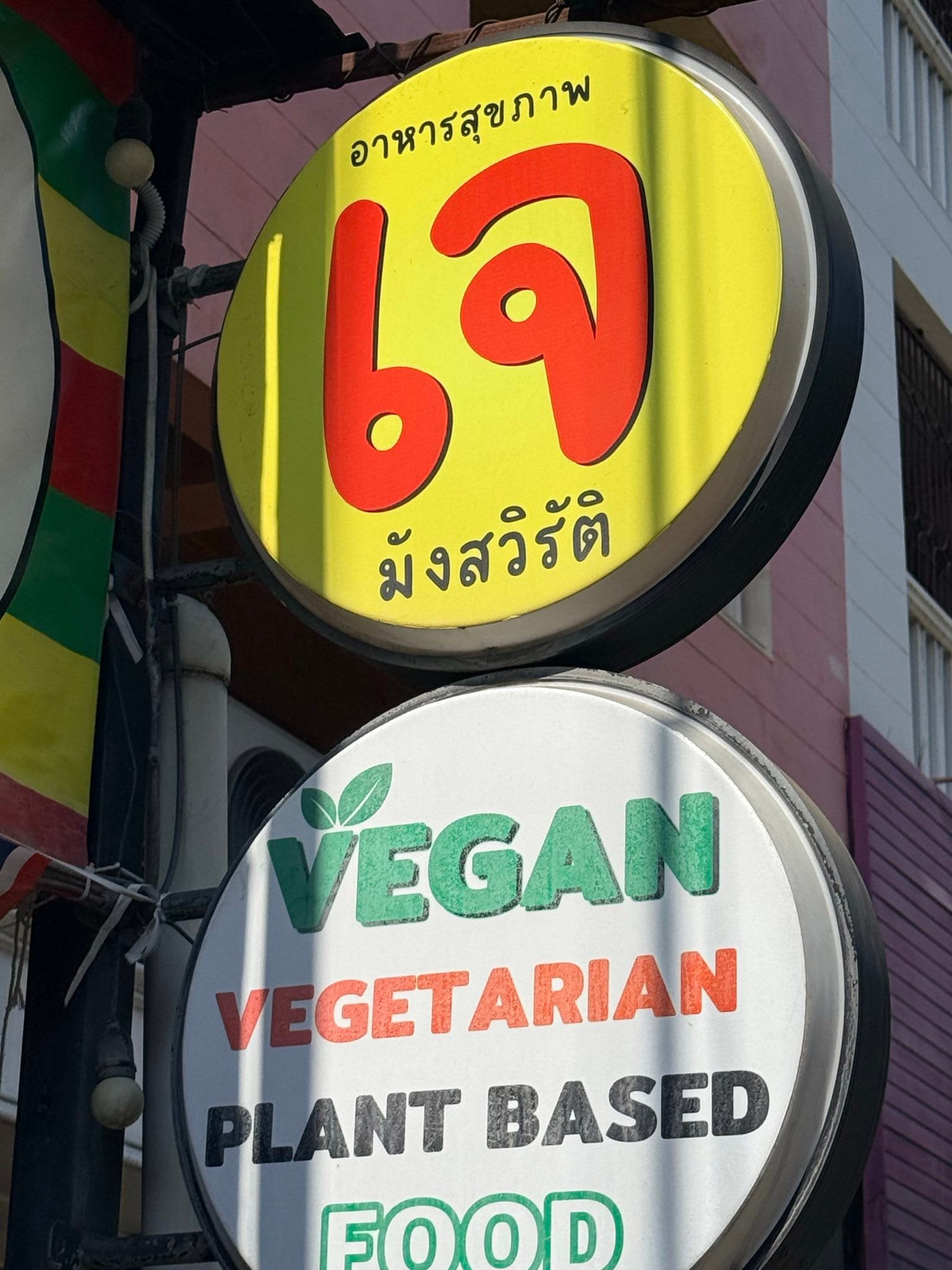
But I walk past the yellow flags of the Jay stalls and I see the glitch. It is not just vegetables. It is “fake meat” engineered to uncanny perfection. Fake fish, fake pork, fake shrimp that taste fresh off the boat but are born in a vat of soy isolate and flour. To compensate for the lack of animal fat, the food is swimming in palm oil. It is sometimes greasy, heavy, and ultra-processed. It is “pure” in spirit but difficult for the body.
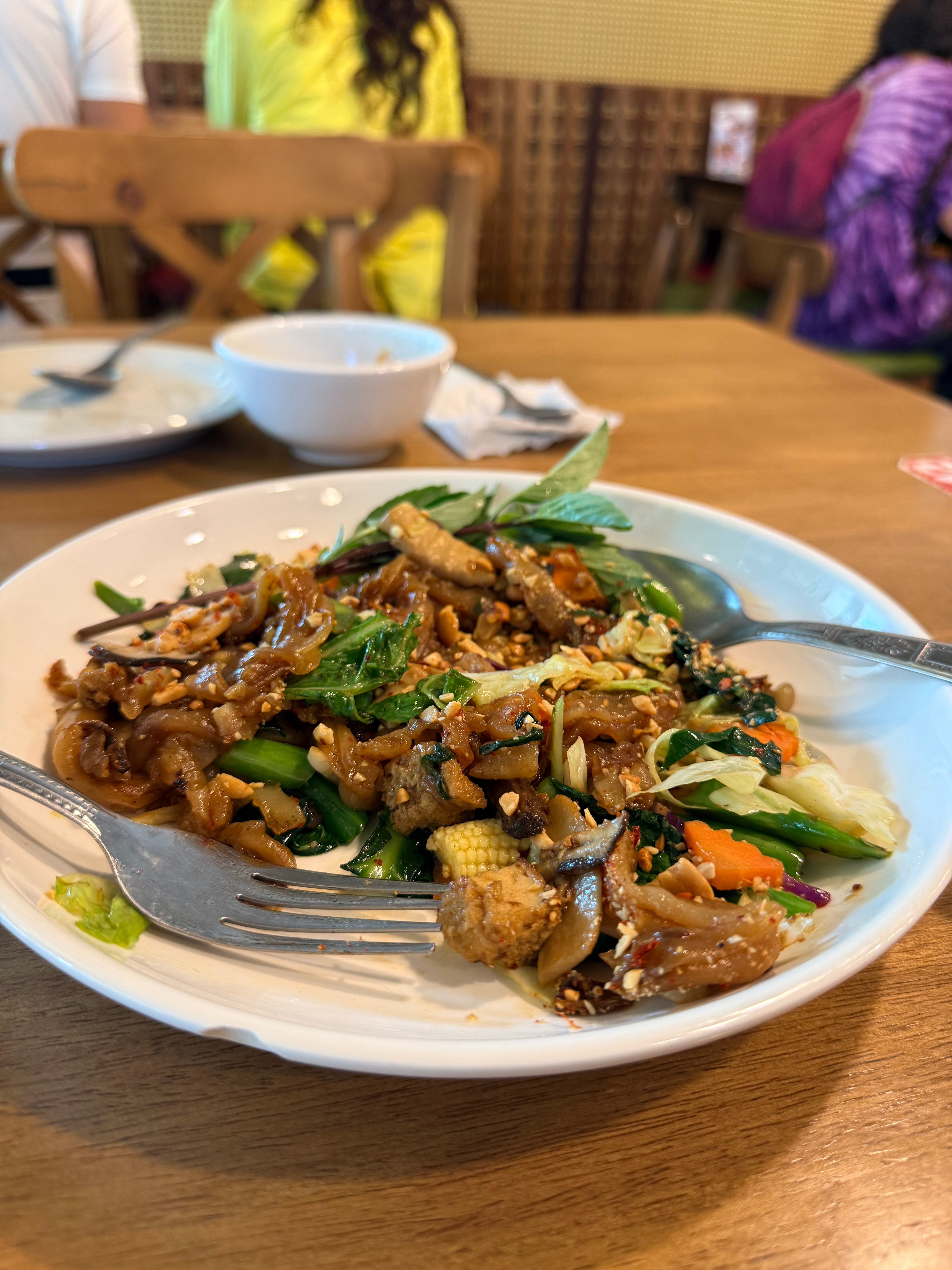
I’ve eaten Jay many times since arriving in Chiang Mai. It’s a good option, as long as I stick to the rice, tofu, and vegetables. Again, back to basics: skip the deep-fried foods, skip the overly processed. With the fake breaded meats, my Agni would drown in the oil, and my blood sugar would spike on the simple starches.
City monks, village monks, are expected to eat whatever they are given. In the morning, they leave their temple and walk around the neighbourhood carrying an alms bowl. People offer them what they have. Often rice, curries, portions individually packaged in plastic bags. So if you peeked in their bowl you may see whatever happened to be available that day. It may include meat, or not. More important than content is apparently timing: Thai monks are forbidden to eat after noon. In some temples, meat broth may be taken as medicine. Medicine, including herbs and pharmaceuticals, may be taken at any time it is needed. Ultimately, the abbot decides. How do they survive this? The randomness, the stochastic input of the street? Ayurveda has a word for it: oka satmya (ओकासात्म्य)—acquired habituation. It is the biological truth that a body can learn to tolerate the unwholesome through repeated, small-scale exposure. The monk has trained his physiology to accept the chaos of the alms bowl as self. It all becomes nourishment because the system has expanded to include it. He has immunity. I have no oka satmya. Oka satmya is built through risk. The monk risks illness to gain immunity, while I have chosen safety.
3. I need to remain aware of viruddha ahara (विरुद्ध आहार), an Ayurvedic concept referring to incompatible food combinations, preparations, or habits that disrupt the body’s metabolism, impair digestive fire and tissue metabolism (धात्वाग्नि dhatvagni) and cause the building of toxic, undigested metabolic waste, āma (आम). It is described as a sticky, morbid, and harmful substance that accumulates in the body when digestive fire (Agni) is weak, resulting in incomplete digestion of food. There are 18 types of viruddha ahara. They are virtually impossible to completely avoid.
400 years of plantation-driven colonialism and global trade in processed foods leave our present-day options in a sorry state. The palate is habituated to empty, cloying, dampening foods. Sugar has been refined to the point of lacking all nutrients, being pure sucrose, the white poison. This isn’t news; it’s the ultimate dietary villain now.
Sugar caused such a craze in 17th century Europe that the Royals and aristocrats hired chefs to create elaborate statues and maquettes out of the stuff. They fought eloquent battles of prestige, outdoing each other in riches. It was, in effect, white gold. So infamous was the Royal love of sugar that they would never smile, for the stuff had rotted their teeth black and holey.
As plantations grew off the back of the transatlantic slave trade sugar became widespread as a commodity, and the plantation owners grew wildly rich. At first, it retained its prestigious status symbol. To add a teaspoon of sugar to your cup of tea in 19th century Britain after your 15-hour factory workday was to show you were one of the good folks, one of those respectable people. You were akin to the King. But as sugar was used as a primary sweetener all over the globe, everywhere industry’s tendrils reached, it replaced the nutrient-dense sweeteners traditionally used by most people. Palm sugar, jaggery, coconut nectar, maple syrup, honey — all of them lost their place to pure refined white sugar. And with the sweet tooth came the propensity for diametrically opposed rich and fatty foods. Deep-fried, clogging, metabolically chaotic industrial oils were created first as byproducts of refinement and then packaged as “cooking vegetable oil.” Fat and sweet in ever greater proportions, intensifying flavours and making impossible a nuanced taste.
White rice is analogous to white sugar. Everywhere it replaced its whole-grain cousin as the staple food in a monodiet, data shows lack of B-complex leading to beriberi, severe thiamine deficiency. And, like sugar, white rice was the food of the ultra-rich, the ruling class. So the ruling class lost their health first, and then once the factory-food was available, everyone else did too. Processed food is directly correlated to poor health outcomes. White basmati rice has the amusing position of currently being considered highly “ayurvedic” despite its lack of nutrient density. My teacher explained to me that it’s because it’s easy to digest. Fair enough. Where I can get them, I choose whole grains, but I eat white rice almost every day in Chiang Mai.
The simple foods of our pre-industrial ancestors are now unpalatably bland, but at least we have better hygiene than the Middle Ages. Have you ever had an everything-flavoured potato chip? What could you possibly compare that with? The spike in blood sugar is a physiological echo of the colonial extraction economy: a rapid boom followed by a devastating crash. So yeah, I eat sugar when I travel – it’s omnipresence gets the better of me.
4. I need to ensure that Bhutagni (भूताग्नि), the 5 elemental digestive fires located in the liver, remain sufficiently strong to clean and nourish the blood. I do this by eating phet nit-noi (เผ็ดนิดหน่อย, mildly spicy) and I am taking herbs for digestive function and to support my blood. TCM is readily available in Thailand, so I found pills: Dan Zhi Xiao Yao Wan (丹栀逍遥丸, Enhanced Free & Easy Wanderer Pills) acts as a systemic coolant, extinguishing the excess liver fire (Ranjaka Pitta) that “cooks” the blood and destroys platelets. Meanwhile, Gui Pi Wan (歸脾丸, Restore The Spleen Pills) reinforces the structural integrity of the blood vessels (Raktavaha Srotas), providing the necessary “holding” energy to prevent the blood from leaking out into the tissues. I ended up consulting a TCM doctor and she approved of my choices, using her own reasoning. She recognized my “heat” pattern and saw impaired digestion as the root of my bleeding issue, and added Shen Ling Bai Zhu Wan (参苓白术丸, Ginseng and Atractylodes Formula) to the stack. It’s a classic formula designed to strengthen the Spleen, boost Qi, and, crucially, eliminate dampness. Excellent, I finally have a combination of herbs to deal with all this Damp Heat.
Think of it like this: I am operating a manual transmission for a missing automatic organ (the spleen), balancing the need to hold Blood (immune thrombocytopenia) against the risk of accumulating Dampness (toxins in the blood). I’m using Dan Zhi Xiao Yao Wan in the morning to ease the taxed Liver heat and stagnation. Then, Gui Pi Wan at noon to build platelets when my digestive fire is at its peak, and utilizing the doctor’s addition of Shen Ling Bai Zhu Wan in the evening to actively drain the swamp and form my stool while I sleep. This medicinal tripod is fueled by easily digestible foods like congee and fish soups, while strictly avoiding the damp trap of too many coconut milk curries or the metabolic crash of fasting. When I transition to India next month, I’ll just swap the herbs: replacing the Chinese cooling agents with Mahatiktaka Ghrita (Bitter Ghee) and the builders with Drakshadi Ghrita (Raisin Ghee), ensuring I continue to cool the vessel without extinguishing the fragile fire keeping me going. Use the tools available wherever you are. This is a rather syncretic approach to herbalism, don’t try it at home without baseline knowledge of the systems.
With the networked ease of access to information, people who care about their health can easily know “what to eat.” However, in the west, only the wealthiest among us (including, unfortunately, anyone who can afford to buy and eat local+organic food in Canada or the USA), and those who are part of the neopeasantry of biodynamic farmers can eat food that is worth calling nourishing. The rest of us are just surviving. It’s a sorry state of affairs.
5. I need to stay hydrated. I ensure hydration by carrying a bottle, and drinking electrolytes in the form of coconut water or dissolvable powder added to my water. This helps cool me in hot climates. I make sure not to snuff out jatharagni by over-drinking or drinking anything ice cold. Cold water possesses the qualities of Sheeta (cold, सीता) and Drava (liquid, द्रव), which directly oppose the Ushna (hot, उष्ण) quality of the central fire. The urge to cool off by drinking cold/iced drinks is a paradox. When you drink cold drinks, you get a shot of cold, but then your body’s capacity to thermoregulate by itself is diminished. You are trading acute relief for chronic weakness.
6. I supplement essential nutrients that I may not be getting from whole foods because I cannot control provenance and quality when eating at restaurants: Brand’s essence of chicken, wheatgrass, spirulina, chlorella. I am a walking paradox. I decry the industrial food market while directly benefiting from its products each day. In a conversation with a language model, the ghost of Susan Sontag told me I am “running on a Cyber-Ayurvedic Operating System.” The AI said: “You are keeping your open system alive with closed-system logic. You call the “Jay” diet a glitch? You are the glitch. You are a biological entity that requires a global supply chain just to stop bleeding.”
Am I romanticizing the past? Sure I am. But I have an opinion based on my reading of history and my understanding of the development of agriculture since the combustion engine and petroleum-derived fertilizers; since the rise of the plantationocene, the global container-shipping industry and the trade in factory-refined food: our capacity for “choice” in rich countries has gone through the roof, but the quality of food available to all but very few people has plummeted to be worse than it was at any time except the worst decades of the early industrial revolution. And now, the poorest on earth are living with analogous food-source loss as we were subjected to in the last 200 years. Everywhere, local food sources, perennial plants, whole grains, wild game, fish — they are vanishingly few. The soil is depleted, the ocean is empty.
7. I eat fish a few times a week. Never deep-fried; ideally steamed or in soup. This pacifies Vata, ensures adequate iodine intake, B12, omegas, and complete proteins. Fish is also the only meat that will build tissues without introducing dampness. This means that it is easy to digest and will not damage jatharagni or Meda-dhatu-agni (metabolism of fat tissue), or lead to accumulation of āma. I eat ideas. I eat Agni and Vata and Omega-3s. I am not eating fish; I am eating a textbook definition of pacifying Vata. Does the fish know it is medicine? Or is it just a dead fish?
How can food be medicine in a case like this? Is it better to simply do as the monks do, to take all that is available as a gift, to be grateful that we get to eat today at all, to recognize that hunger and starvation are two different beasts, and eat what is given? Would I be better off if I just gave up my picky eating and accepted all food still existing as “prasad”, a gift from Gaïa, Mother Earth, the Goddess? Or should I take a hard-line ecological stance, and refuse to eat anything that does not meet my standards of sustainable purity, anything that did not grow within 200km of where I eat it? This is the principle of desha satmya (देश सात्म्य), geographic suitability. The food of the land is the medicine for the people of that land. It is a beautiful, coherent theory. But what happens when the land itself has changed? When the soil is depleted? And what happens when I am the variable that doesn’t fit?
I am a transplant, biologically displaced. The land of Thailand is hot, damp, and spicy (Pitta-increasing). My body is Pitta-aggravated (bleeding). By the laws of desha satmya, I should leave. I should go to a cold, dry climate, but I’m here, and I love it here. And because I’m here, I must create an artificial micro-climate inside my body using imported herbs and local foods. I’m not vegetarian anymore. I am terraforming myself, but don’t call it health, call it solitary confinement. I am playing with fire. The “local” here is a complex negotiation between tourism and deforestation. The air in Chiang Mai contains particles from Beijing. The fish in my soup contains microplastics from California. Is it better still to be vegan; to refuse all animal-derived products, but risk severe B12 insufficiency, anemia, and what TCM calls “blood deficiency”? What about the vegan reliance on industrially isolated supplements and factory-made protein replacements, wrapping virtue in petrochemicals?
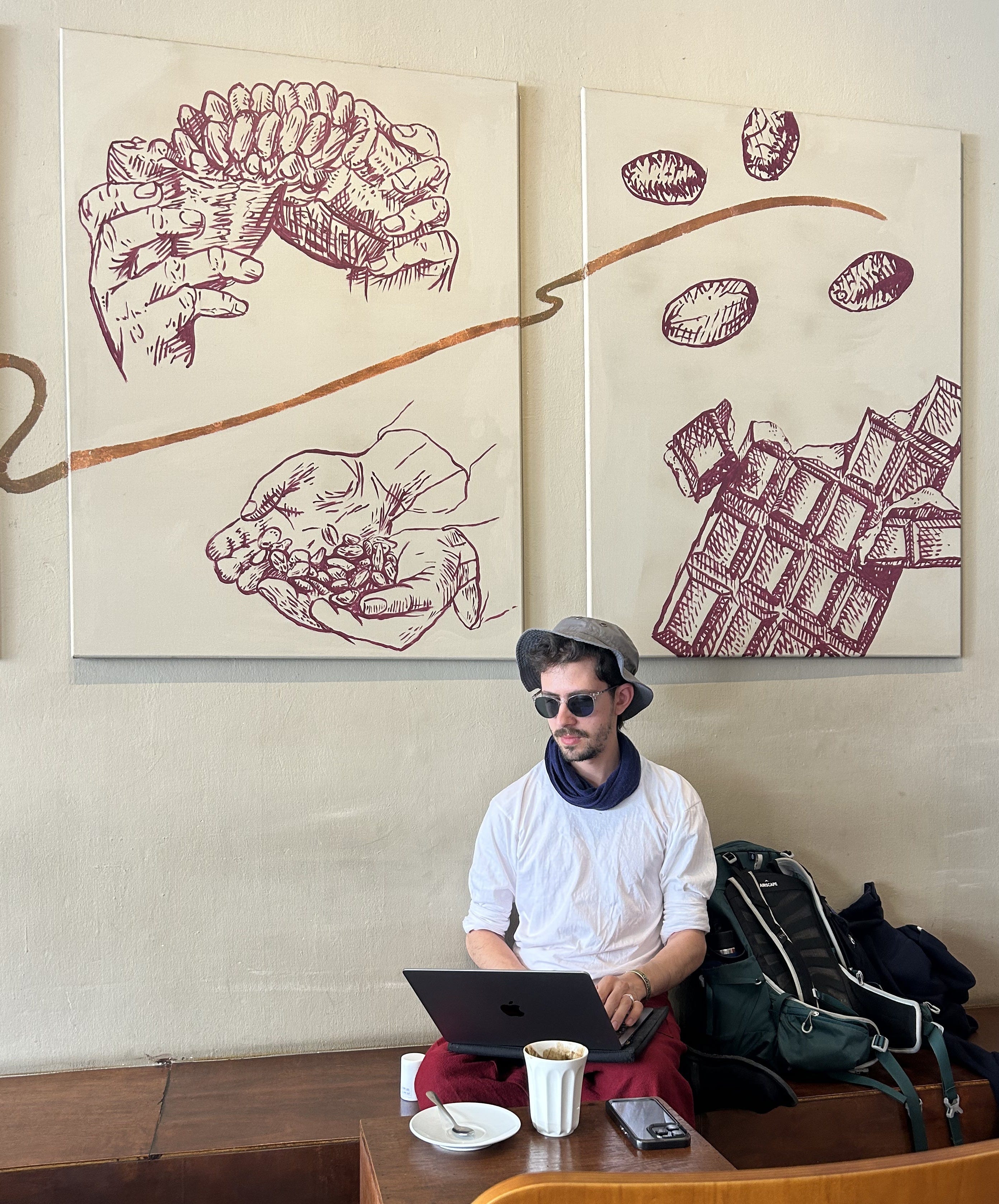
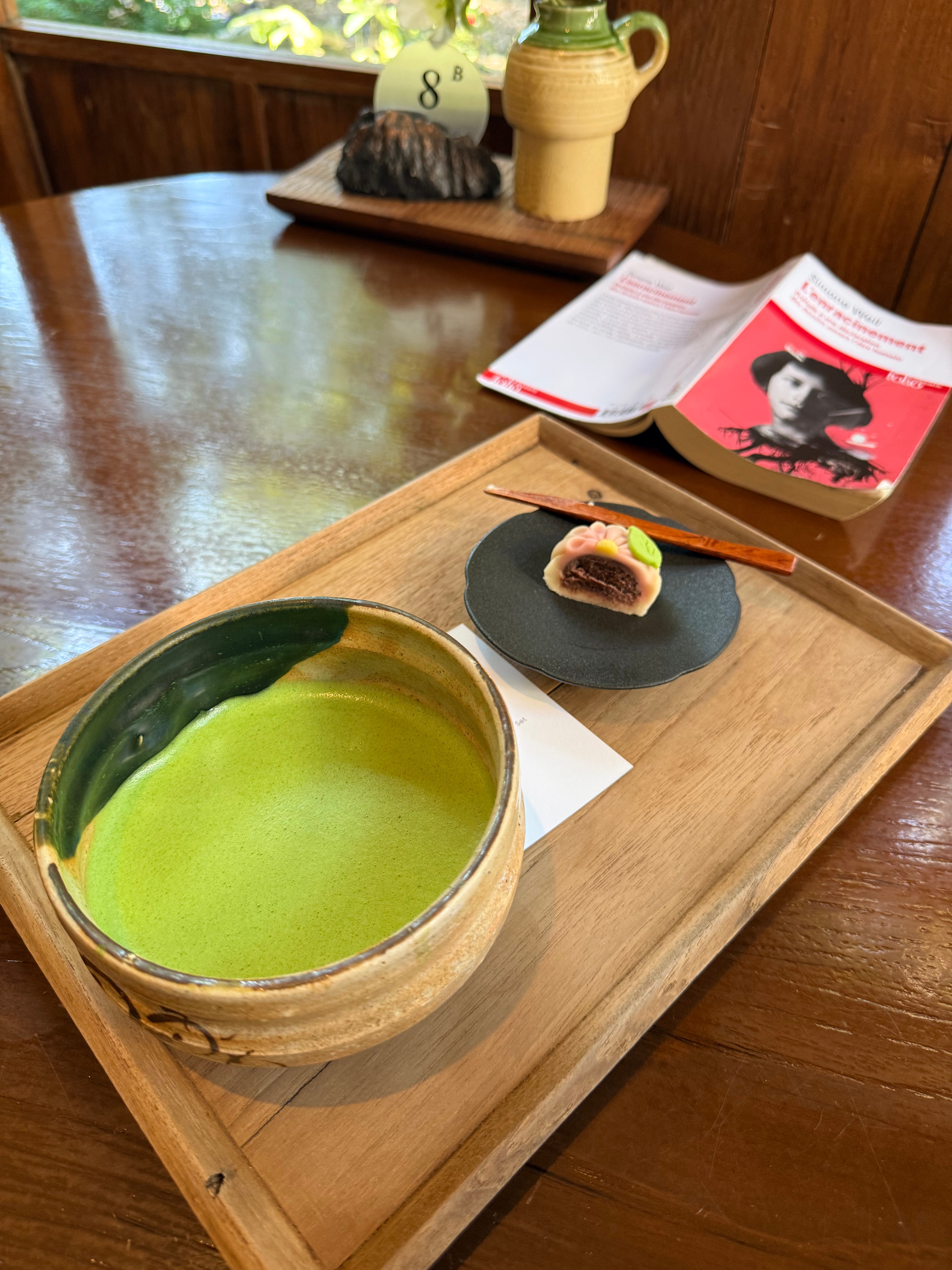
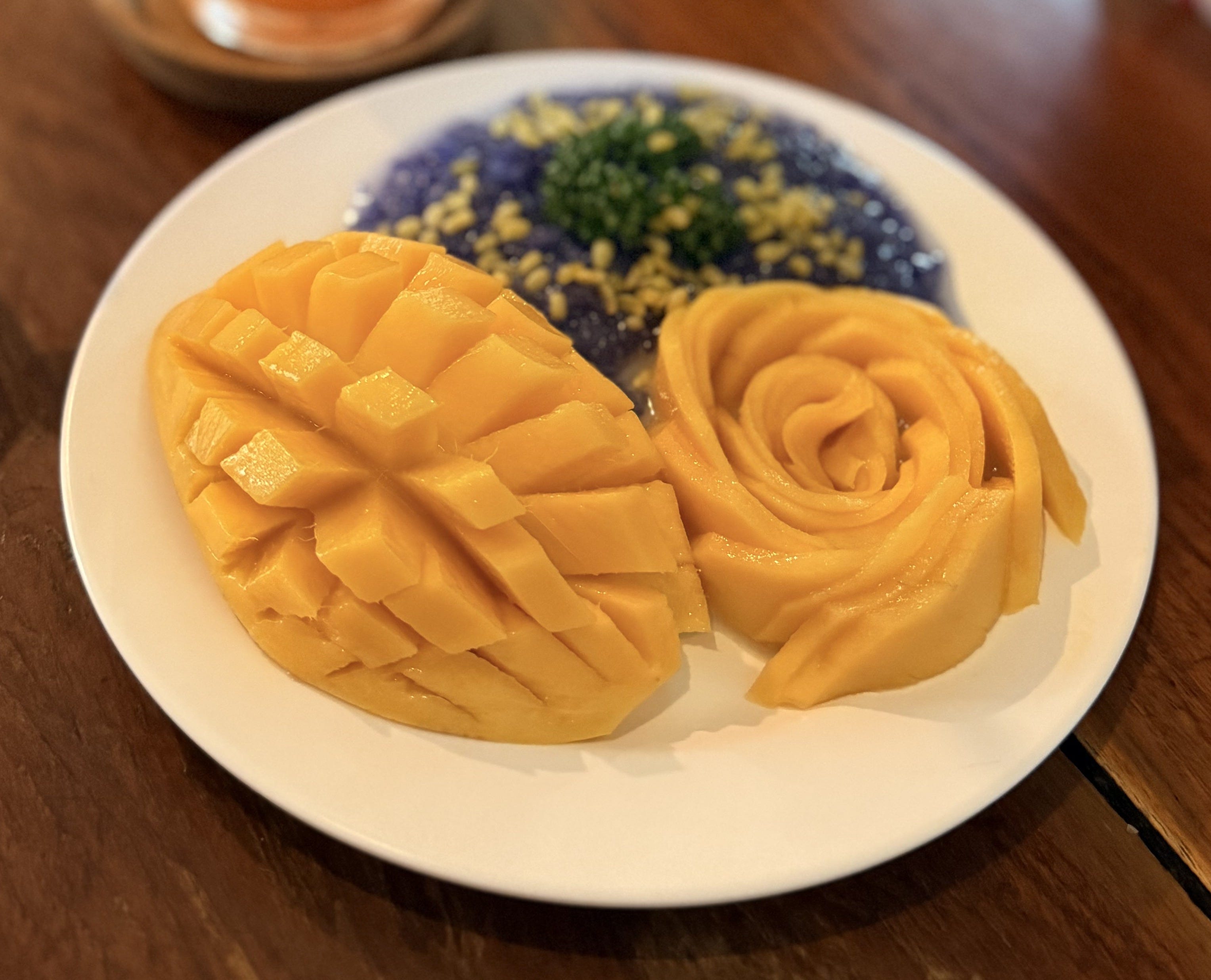
8. I eat no raw food except occasional fruit. Raw is good for pacifying Pitta in moderation but difficult for Agni in the tropics, and it also carries a greater risk of bacterial infection. I minimize dairy, unless it is fermented and traditional. Even then, industrial dairy is usually mucus-forming and inflammatory. I eat the darkest chocolate I can find, and I drink rare and superlative matcha; Chiang Mai has a vibrant chocolate and matcha culture. Today I had a 100% dark chocolate and matcha oat-milk latte, and it was absolutely amazing. I love my treats, too. Mango sticky rice? Oh My God.
What matters more: ecology, or health? Am I forced to choose? The ecological imperative is to eat local, eat what is given, and reduce the carbon footprint. The biological imperative is to eat specific, imported foods, and optimize for micronutrients at a global radius. These two ethical frameworks are perpendicular and incompatible. To eat ecologically is to expose the sensitive, autoimmune-compromised body to the ravages of the degraded environment. To prioritize health is to sever the link with the local soil and hook myself up to a global IV drip of Health Food.
Any sound ecology, boasting the traditional and contemporary knowledge of what makes “health” in the human organism and the complex assemblage of the food supply chain, should be organized in such a way as to optimize the symbiosis of human and non-human flourishing, in full respect of the natural hierarchy known as the food chain, which has been the determining organizing factor in human societies for all time.
But that’s not the present reality. Small, pre-industrial cultures could and did do better, but they also fucked up at smaller scale. Civilizations and empires have always despoiled the earth. The Mayans had their polycrisis, too: drought, warfare, soil depletion and deforestation, they ruined the Central American rainforests. Cities are heat engines, they demand and facilitate a division of labour, land, and resources that will always create waste and over-consume neighbouring (or distant) territories. Ken Wilber made the point succinctly: modern technology, bigger problems, bigger potentials.
The paradox is amazing: I am intellectually disgusted by the modern food system, but I am physically dependent on its advances in nutrition science to know what to eat, and supply chain efficiency to find so-called health within the system itself. The monk walks the neighborhood, holding a bowl, and eats whatever falls into it. If it is rice, he eats. If it is poison, he eats. He has no self. Me? I have so much self. I am dripping, heavy, burdened with self.
How do I eat? Given my history, prakriti (प्रकृति, constitution), vikriti (विकृति, current state), and means (modest by western standards, but still in the global top 15%), I do the best I can to prioritize health. It’s simple. I follow these rules. Otherwise, I start bleeding. Literally. If I don’t eat right, according to the principles that I have learned through extensive study of TCM, nutrition, and Ayurveda, as well as ongoing evaluation and observation of my body’s reactions to the decisions I make day to day, week to week, month to month: I bleed. It shows up in bruises, in hemorrhoids, in my gums. I have no leeway. I cannot fuck around and find out just how totally scrumptious those deep-fried King Prawns are. I cannot just try1 what is given to me without knowing what it is. And that’s okay. It is rigid, it is artificial, but it leads my biology towards sattva (सत्त्व, goodness/purity), simplicity, ease. I am trying to treat a spiritual famine with factory-produced essence of chicken and farmed spirulina. I am eating supplements to replace a world I have deemed poisonous at the crossroads of history and science.
It’s all still just illness as metaphor. Sontag would have a field day. The monk has no fear of food poisoning because the monk has already accepted the poisoning of the world. I have not. The illness may be a metaphor, but the bleeding is real. Maybe it’s better to be honest: I’m afraid of getting sick and dying. I’m afraid of food poisoning. I’ve built an elaborate cultural theory to justify the fact that I am unable to digest pork belly dumplings. If I didn’t bleed, would I still eat this way? Or would I be deep-frying the fake shrimp too?
“Come on Laure! Just one! Try it!” said the well-meaning friend, onlooker, passerby.
I read your whole essay, slowly and carefully, so impressed with your weave between the global and the personal, the body and the land, spiritual consciousness and practical necessities - all parsed out in detail through the lens of food. Your writing - truly remarkable. Your experience - amazing. Your body-soul attentiveness - astonishing and inspiring. Thank you!