


Corey Hess, a Zen-trained bodyworker and teacher of standing meditation, traces what happened when the practice of getting well began to interfere with the possibility of being well. The conversation moves through a month in a dark room at Sōgen-ji monastery in Japan, the difference between energy as substance and energy as contact, the body as a pressure cooker of intensity, the day the striving had to stop, and the second breath that arrived when the first one ran out. Health, in this telling, is not a destination reached through technique. It is the texture of being met by something larger than strategy, available to anyone who can stop trying.
About Corey
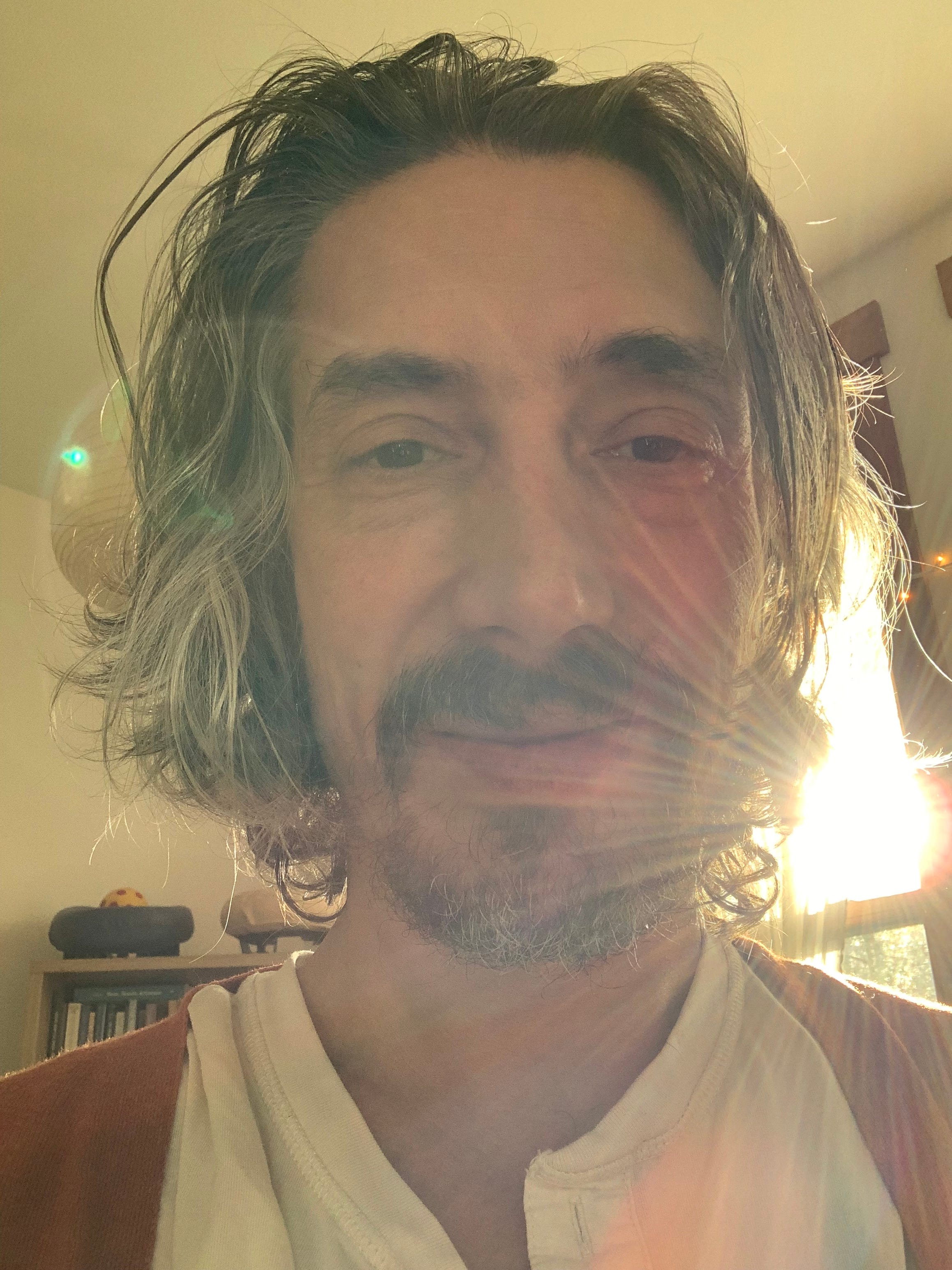
Corey Hess trained at Sōgen-ji, a Rinzai Zen monastery in Japan, where he spent years in intensive seated practice under a roshi whose presence he describes as “every cell moving in one-pointed power.” He teaches a bodywork and Qigong practice shaped by that training: standing meditation, non-directed bodywork, breath as contact with the room. He works with individuals and groups in a private practice context and lives in the United States.
Corey’s website: https://coreyhessbodytherapy.com/
&& Subscribe to Corey’s substack here:
Timestamps
00:00 Welcome and the first question
00:02 The body as a pressure cooker of intensity
00:04 The roshi at Sōgen-ji
00:06 Sitting 18 hours a day in pain
00:08 The left eye locks up
00:09 A month in a dark room
00:11 Dropping all the techniques
00:13 What the techniques were protecting
00:14 The room becomes substantial
00:16 The second breath
00:18 Energy, in two registers
00:22 What energy is not
00:24 The body in direct conversation with the room
00:26 The barrier that never made sense
00:28 Health as being met by something larger
00:30 Faith, blind and otherwise
00:33 Listening with the whole body
00:37 Honesty as meeting the moment
00:41 The breath as a way to merge
00:44 A recommendation to feel rather than read
00:45 What the practice is for
00:47 Where we are right now is where it is
---
References Mentioned
Sōgen-ji — A Rinzai Zen monastery in Japan where Corey trained. The full name is Sōgen-ji Sōjiji (総持寺), though the monastery referenced in the conversation is the Sōgen-ji of the lineage of Hakuin Ekaku, in Okayama. The training there is the formative practice behind Corey’s teaching.
Rinzai Zen — One of the two major schools of Japanese Zen Buddhism, the other being Sōtō. The Rinzai tradition emphasizes kōan practice, intensive seated meditation (zazen), and face-to-face interaction with the teacher (the roshi). Founded in China as the Linji school, brought to Japan by Eisai in the twelfth century. The lineage of Hakuin Ekaku (1686–1769) is the most influential Rinzai line in modern Japan.
Zhan Zhuang — Standing meditation, the foundational qigong practice. “Standing like a tree.” The structure of the standing practice is the entry into the cultivation of qi in many Chinese and Japanese somatic traditions. Used in Corey’s practice as a complement to seated zazen and to non-directed bodywork.
Non-directed body movement — A somatic practice in which the practitioner brings attention to the body without imposing a technique or a goal. The body’s own movement becomes the material of the practice. The exercise Corey describes from the first evening in Missoula, twenty-five people in a room, the body releasing in its own direction, is the entry point.
Rolfing — A form of structural integration and deep tissue bodywork developed by Ida Rolf in the twentieth century. Corey worked with a Rolfer during the period between the Missoula episode and the move to Japan. The structural bodywork was useful to him, but the limitation he names is the one all structural work eventually arrives at: the body remembers the strategy of control, and the strategy is the thing that has to change.
Lower dantian / tanden — In Chinese and Japanese somatic traditions, the center of gravity about three finger-widths below the navel. The seat of qi cultivation in qigong and the focus of breath practice in Zen. In the conversation, Corey names the dantian as a thing you can develop physically, and also as something that is “totally way out there,” a paradox of a center that is also a horizon.
Podcast Theme music: « Tremblement » de Michaël Boudreau, from the album Terre.
Link Tree: https://linktr.ee/michaelboudreau


